






SEO Strategy for a New Website: The 90-Day Roadmap
Launching a new website is an exciting milestone, but gaining visibility on search engine results pages (SERPs) can feel daunting. When starting with a fresh domain, your site has zero domain authority, zero backlinks, and no historical performance data for Google’s algorithms to evaluate. A generic checklist won’t cut it—you need a dedicated seo strategy for new website growth tailored specifically to zero-authority domains.
Understanding how long it takes for a new website to rank on Google is critical for managing expectations. Generally, a brand-new domain requires 3 to 6 months to start earning consistent organic impressions, and 6 to 12 months to drive meaningful organic traffic. During the initial 90 days (often referred to informally as the Google Sandbox period), search engines evaluate your site’s technical reliability, content quality, and entity credibility.
To succeed during this phase, your strategy must pivot away from high-competition keywords and focus instead on building topical authority through hyper-targeted content clusters and solid technical fundamentals.
| Strategy Dimension | Brand-New Domain Strategy | Established Domain Strategy |
|---|---|---|
| Primary Keyword Focus | Low-competition, long-tail, zero-search-volume queries | Medium to high-volume commercial/informational terms |
| Indexing Target | Strict technical verification & manual submission | Automated, rapid discovery via existing crawl budget |
| Authority Building | Topical mapping & foundational entity setup | Scalable link acquisition & digital PR campaigns |
| Primary Early Metric | Search Console impressions & indexed page count | Organic click growth, keyword rankings & conversions |
Phase 1: Technical Setup & Pre-Launch Essentials
Before publishing content, you must ensure Google can crawl, render, and index your website without friction. Technical missteps on a fresh domain can delay indexation by weeks or months.
1. Google Search Console & Analytics Integration
Set up Google Search Console (GSC) and Google Analytics 4 (GA4) immediately upon site deployment. Verify your domain using DNS record verification to ensure you capture data across all protocol variants (http, https, www, and non-www).
2. XML Sitemap & Robots.txt Configuration
Your robots.txt file must explicitly allow search engine bots to crawl your site. Ensure essential directories are open while disallowing staging environments, admin panels, or internal search result pages. Create an automated XML sitemap containing only clean, canonical 200 OK URLs, and submit it directly inside Search Console.
3. Canonicalization and HTTPS Protocols
Enforce HTTPS across your entire domain and set up a 301 redirect rule pointing non-www traffic to www (or vice versa). Verify that every page contains a self-referencing canonical tag to prevent duplicate content issues right out of the gate.
4. Core Web Vitals & Mobile-First Architecture
Google evaluates sites using mobile-first indexing. Optimize your design for mobile devices, minimize JavaScript execution time, leverage modern image formats (WebP/AVIF), and utilize aggressive caching to score high on Core Web Vitals performance metrics. For a detailed checklist of technical prerequisites, explore our guide on the ultimate technical SEO checklist for modern websites.
Phase 2: Low-Competition Keyword Strategy & Topical Mapping
A common mistake when developing an seo strategy for website launches is targeting broad, high-volume keywords right away. Attempting to rank for competitive terms on a new domain with zero backlinks will lead to frustration. Instead, focus on building topical authority for new websites through structured content mapping.
1. Long-Tail and Low-Difficulty Keyword Selection
Identify long-tail search queries with low Keyword Difficulty (KD) scores. Don’t shy away from terms labeled with low or “zero” search volume by keyword tools. In reality, these micro-niches frequently carry high conversion intent and experience lower algorithmic competition, making them ideal targets for fresh domains.
2. Developing Content Clusters and Topical Maps
Topical authority is established when a website thoroughly covers a subject area from every practical angle. Rather than publishing random articles, structure your content into hub-and-spoke models:
- Pillar Page (Hub): A comprehensive overview page targeting a broader topic (e.g., “Complete Guide to HR Automation”).
- Cluster Pages (Spokes): Specific, narrow subtopics linking back to the hub (e.g., “HR Automation Tools for Small Business”, “How to Automate Employee Onboarding”).
Using a structured approach ensures search engines clearly understand the context and authority of your content. Learn more about developing an effective approach in our keyword research strategy framework.
Phase 3: Content Creation & Internal Linking Architecture
Once your topical map is defined, execution requires publishing thorough, well-optimized content paired with a deliberate internal linking framework.
1. Writing Comprehensive, Intent-Focused Content
Ensure every piece of content directly satisfies search intent. Structure articles logically using clear H2 and H3 tags, bulleted summaries, comparative tables, and practical examples. Google’s E-E-A-T (Experience, Expertise, Authoritativeness, and Trustworthiness) guidelines require original insights, clear author bios, and accurate facts rather than surface-level AI summaries.
2. Strategic Internal Linking Networks
Internal links distribute link equity across your domain and signal relationships between pages to search crawlers. Follow these internal linking rules for new domains:
- Link from spoke articles back to the main pillar page using exact-match or partial-match anchor text.
- Cross-link contextually relevant spoke articles within the same cluster.
- Ensure no key landing page is left orphaned (unlinked from other internal pages).
If you’re planning a full site launch, see our guide on building an actionable SEO strategy for a new website launch.
Phase 4: Establishing Initial Trust and Entity Authority
How do you build trust when your site has no incoming backlinks? Establishing entity authority requires building off-page signals that prove your business exists beyond your website.
1. Brand Entity Setup & Structured Data
Implement Organization or LocalBusiness Schema on your site to explicitly inform search engine crawlers about your brand details, official logo, social profiles, and contact details. For detailed guidance on technical markup, refer to our guide on technical SEO schema strategy implementation.
2. Digital Footprint & Foundational Citations
Secure consistent brand names across all major platforms, including:
- Google Business Profile (crucial for local visibility)
- LinkedIn Company Page, Twitter/X, Crunchbase, and YouTube
- Niche-specific software or business directories (e.g., Clutch, Capterra, Yelp)
These foundational citations establish your entity in search knowledge bases without risky link schemes.
3. Earned Backlink Outreach Strategies
While mass outreach is often inefficient for new domains, focused relationship-building pays off. Pitch guest contributions to industry publications, respond to press requests on platforms like Connectively (formerly HARO), and leverage supplier or partner ecosystems for earned links. Read more in our detailed resource on proven link building strategies to drive organic authority.
Phase 5: Measuring Progress & Indexation Troubleshooting
Evaluating success for a new domain requires different metrics than evaluating an established website. In the early stages, focusing solely on organic clicks can be misleading.
1. Tracking Leading vs. Lagging Metrics
Track your campaign progress across three clear phases:
- Month 1 (Indexing Phase): Track total indexed pages in GSC, crawl status, and error logs.
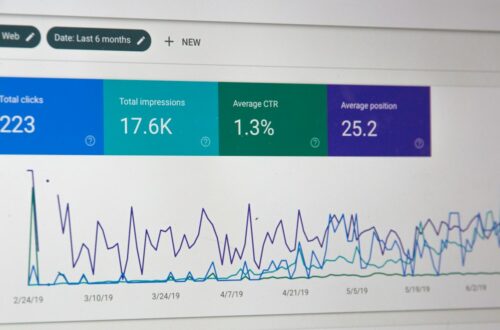
- Months 2–3 (Impression Phase): Monitor total GSC impressions and long-tail position movement (ranking in positions 20–50 is normal early progress).
- Months 4–6+ (Click Phase): Measure actual organic traffic growth, top-10 keyword rankings, and initial goal conversions.
2. Troubleshooting “Discovered – Currently Not Indexed” Status
It is common for fresh domains to experience indexation delays where Search Console displays “Discovered – currently not indexed” or “Crawled – currently not indexed”. Fix these issues by implementing the following steps:
- Improve Content Depth: Combine thin or overlapping posts into detailed, authoritative guides.
- Strengthen Internal Links: Add 2 to 4 contextual internal links pointing to unindexed URLs from indexed, high-traffic pages.
- Request Manual Indexing: Submit URLs via the GSC URL Inspection tool after upgrading page quality.
Frequently Asked Questions
How long does it take for a new website to rank on Google?
It generally takes 3 to 6 months for a new website to gain initial indexation traction and rank for low-competition long-tail keywords. Ranking for moderately competitive business keywords usually takes 6 to 12 months of consistent content publishing, technical refinement, and authority building.
What are the most critical SEO steps when launching a new website?
The most critical steps include: verifying Google Search Console and GA4, submitting an XML sitemap, ensuring mobile speed and HTTPS security, selecting low-competition long-tail keywords, publishing organized content clusters, and creating foundational entity profiles across major platforms.
How do you establish topical authority on a domain with zero backlinks?
You establish topical authority by building tightly linked content clusters around low-competition, specific subtopics. By thoroughly addressing every customer search intent within a narrow niche, search engines recognize your site’s subject matter expertise even before you build high Domain Authority backlinks.
Should a new website target high-volume keywords right away?
No. Targeting high-volume, high-difficulty keywords on a new domain is ineffective because established websites with stronger link profiles dominate those terms. Focus initial efforts on low-competition long-tail queries where your specialized content can rank quickly.
Photo by Stephen Phillips – Hostreviews.co.uk on Unsplash.