






Technical SEO vs On-Page SEO: At a Glance
Understanding the difference between technical SEO and on-page SEO is fundamental for building an organic growth engine. While both aim to increase search engine visibility and drive qualified organic traffic, they operate at completely different levels of your website ecosystem.
In short: Technical SEO ensures search engines can efficiently access, crawl, render, and index your website. On-Page SEO ensures search engines and users understand, value, and respond to the content on those indexed pages.
| Dimension | Technical SEO | On-Page SEO |
|---|---|---|
| Primary Focus | Infrastructure, accessibility, indexability, site speed | Content relevance, keyword intent, user experience, meta tags |
| Target Audience | Search engine crawlers & site architecture | Human searchers & content parsing algorithms |
| Core Goal | Ensure search engines can crawl and index without friction | Match user search intent and outrank competing content |
| Primary Execution | Web developers, technical SEO specialists, DevOps | Content strategists, copywriters, SEO specialists |
| Key Metrics | Crawl error rates, indexation ratio, Core Web Vitals, server response time | Keyword rankings, organic CTR, dwell time, conversion rate |
| Primary Tools | Google Search Console, Screaming Frog, DeepCrawl, PageSpeed Insights | Ahrefs, Semrush, SurferSEO, Google Docs, Clearscope |
What is Technical SEO?
The technical SEO meaning refers to optimizing a website’s underlying code, server setup, and architecture to help search engine spiders crawl, interpret, and index your pages seamlessly. It creates the infrastructure upon which your content rests.
If search engine bots cannot crawl your site efficiently, even world-class content will remain invisible in search engine results pages (SERPs).
Core Components of Technical SEO
- Crawlability & Indexability: Managing your
robots.txtfile, XML sitemaps, canonical tags, and HTTP status codes (e.g., resolving 404 errors and 301 redirect chains). - Site Architecture & Hierarchy: Designing a logical URL structure and flat crawl depth (ensuring key pages are accessible within 3 clicks of the homepage).
- Rendering & Javascript Execution: Ensuring client-side rendered JavaScript framework pages (such as React or Angular) properly deliver content to Googlebot.
- Security (HTTPS/SSL): Securing data transmissions with SSL/TLS certificates, a standard ranking signal since 2014.
- Performance Infrastructure: Optimizing server response times (TTFB), CDN integration, resource caching, and code minification (CSS/JS).
For a detailed breakdown of foundational checks, consult our ultimate technical SEO checklist.
What is On-Page SEO?
On-Page SEO (sometimes called on-site SEO) is the practice of optimizing individual web page components—both the visible content and the HTML source code—to rank higher and earn more relevant search traffic.
While technical SEO gets search engine crawlers through your front door, on-page SEO convinces both algorithms and human visitors that your page delivers the most thorough, authoritative response to a search query.
Core Components of On-Page SEO
- Search Intent & Keyword Alignment: Conducting rigorous research using a proven keyword research strategy to align content with informational, commercial, or transactional intent.
- Meta Tags & On-Page Headings: Crafting targeted Title Tags, Meta Descriptions, H1s, and subheadings (H2-H4) that clearly communicate page topic hierarchy.
- Content Depth & Quality (E-E-A-T): Demonstrating Experience, Expertise, Authoritativeness, and Trustworthiness through original insights, structured data tables, and comprehensive coverage.
- Image & Media Optimization: Adding descriptive ALT text, compressed file formats (WebP), and informative captions.
- User Experience (UX) & Readability: Formatting content with short paragraphs, scannable bullet points, clear typography, and strong call-to-actions (CTAs).
Key Differences Between Technical SEO and On-Page SEO
To systematically evaluate technical SEO vs on page seo, we must look at how execution, ownership, and measurement differ within a search engine marketing campaign.
1. Structural Scope vs. Page-Level Scope
Technical SEO operates largely at the site-wide or template level. A single error in your robots.txt file or an unintended noindex directive can deindex thousands of pages instantly. Conversely, on-page SEO is typically executed on a page-by-page or content cluster level, optimizing individual pieces of content to target specific search terms.
2. Technical Execution vs. Content Strategy
Technical SEO requires working directly with web developers, IT teams, and database administrators to alter site code, server directives, and platform infrastructure. On-page SEO is primarily executed by editors, copywriters, and content marketers who craft text, images, and user messaging.
3. The Wider SEO Ecosystem: Technical vs On-Page vs Off-Page SEO
To put both pillars in perspective, it helps to understand technical SEO vs off page seo as well:
- Technical SEO: How well search engines can access and read your site.
- On-Page SEO: What your site says and how relevant it is to specific user searches.
- Off-Page SEO: How authoritative and trustworthy the web perceives your site to be (primarily through external backlinks and brand signals).
Without solid technical foundations and optimized on-page content, acquiring external backlinks (off-page SEO) yields heavily diminished returns.
The Grey Areas: Schema, Page Speed, and Internal Links
Many SEO practitioners get confused by overlapping tactics. Let’s resolve the three most common boundary questions once and for all.
Is Schema Markup Technical SEO or On-Page SEO?
Answer: Both, but primarily Technical execution with On-Page contextual intent.
Schema markup (Structured Data) uses JSON-LD code added directly to a page’s HTML to help search engines understand entities, author info, FAQs, and product attributes. Creating, validating, and injecting clean code across templates is a technical task. However, deciding which content elements to mark up and aligning them with page copy is an on-page content decision. For an in-depth implementation guide, explore our technical SEO schema strategy guide.
Is Site Speed Considered Technical SEO or On-Page SEO?
Answer: Primarily Technical SEO, with On-Page asset management.
Page speed and Core Web Vitals (LCP, INP, CLS) depend heavily on technical setup: server capacity, caching rules, render-blocking JavaScript, and CDN routing. However, on-page asset optimization—such as uploading uncompressed 5MB images or embedding heavy third-party media widgets—directly impacts speed on individual pages. Speed is infrastructure-driven, but content-influenced.
Where Do Internal Links Belong?
Answer: The intersection of Architecture (Technical) and Context (On-Page).
Building a logical site taxonomy and distributing PageRank through link depth is a technical architecture priority. However, selecting contextual anchor text inside body text to guide users to related topics is an on-page optimization task.
Priority Framework: Which Should You Fix First?
A common operational challenge faced by resource-constrained teams is deciding whether to fix crawl errors or rewrite meta tags first. When executing an end-to-end campaign or launching an SEO strategy for new websites, follow this 4-tier technical seo vs on page seo priority framework.
Tier 1: Critical Technical Blockers (Fix Immediately)
If search engine bots cannot access your website, no amount of keyword optimization will generate traffic. Resolve these technical issues first:
- Accidental
noindextags on revenue-generating pages robots.txtdirectives blocking critical JS/CSS assets or site sections- Severe DNS outages, host failure, or HTTP 5xx server errors
- Broken SSL security certificates causing security warnings
Tier 2: Foundational On-Page & Architecture (Establish Baseline)
Once your site is crawlable, ensure search engine engines understand your core structure and targeting:
- Fix duplicate title tags and missing H1 headings
- Implement primary keyword mapping across main landing pages
- Establish clean, flat internal linking hierarchies between category and detail pages
- Correct broken internal 404 links and redirect loops
Tier 3: Content Quality & On-Page Intent Optimization (Scale Growth)
With a healthy infrastructure established, focus on driving rankings and user engagement:
- Expand thin content to thoroughly answer search intent
- Optimize image ALT tags, meta descriptions, and visual hierarchy
- Update outdated stats, quotes, and content sections to maintain E-E-A-T
- Improve call-to-action placement to boost conversion rates
Tier 4: Advanced Technical & Performance Tuning (Gain Edge)
Finally, optimize for competitive edge and algorithmic preference:
- Optimize Core Web Vitals (Largest Contentful Paint, Interaction to Next Paint)
- Implement granular Schema structured data for rich snippets
- Optimize log files to streamline crawl budget on enterprise sites
How Technical and On-Page SEO Work Together
Neither technical nor on-page SEO can succeed in isolation. They function as a symbiotic ecosystem where each pillar amplifies the other.
Consider these two real-world failure scenarios:
- Scenario A (Great Content, Poor Technical SEO): You publish a 3,000-word, highly authoritative guide. However, your CMS dynamically generates duplicate URLs with parameter strings without canonical tags, and client-side rendering fails to display text to crawlers. Result: The content is never indexed properly and gains zero organic traffic.
- Scenario B (Flawless Technical SEO, Poor Content): Your website scores a 100/100 on PageSpeed Insights, passes all Core Web Vitals, has flawless JSON-LD Schema, and perfect crawl pathways. However, your pages contain auto-generated 150-word duplicate articles that fail to answer search intent. Result: Google indexes the pages, but ranks them on page 8 due to low content value.
High-performing organic strategies unite both disciplines into a single workflow. Performing a periodic audit using a comprehensive SEO audit checklist ensures that technical foundation and content quality grow in tandem.
Unified On-Page vs Technical SEO Checklist
Use this unified on page seo vs technical seo checklist during website audits and launch reviews.
Technical SEO Master Tasks
- [ ] Verify domain canonicalization (HTTP to HTTPS, non-WWW to WWW).
- [ ] Validate XML sitemap submission in Google Search Console.
- [ ] Audit
robots.txtto confirm critical paths are open to bots. - [ ] Eliminate 404 errors and 301 redirect chains.
- [ ] Optimize Core Web Vitals metrics across mobile and desktop.
- [ ] Implement self-referencing canonical tags on all indexable pages.
- [ ] Check mobile responsiveness and viewport configuration.
On-Page SEO Master Tasks
- [ ] Include primary target keyword naturally in H1 and Title Tag.
- [ ] Ensure Title Tags stay under 60 characters and Meta Descriptions under 155 characters.
- [ ] Structure body text logically with scannable H2, H3, and H4 headings.
- [ ] Verify search intent matching (informational, transactional, commercial).
- [ ] Add descriptive alt text to all embedded images.
- [ ] Insert 3–5 contextual internal links pointing to related topically relevant pages.
- [ ] Ensure author background and authoritative source citations support E-E-A-T.
Frequently Asked Questions
What is the difference between technical SEO and on-page SEO?
Technical SEO focuses on website infrastructure, crawlability, speed, and indexing to ensure search engines can properly access and process pages. On-page SEO focuses on optimizing the visible content, meta tags, heading structures, and user experience of individual web pages to match search intent and rank higher.
Is site speed considered technical SEO or on-page SEO?
Site speed is primarily considered a technical SEO factor because it depends heavily on server response time, caching, file compression, and script execution. However, on-page optimization choices—such as image size and embedded media—also impact page loading speed.
Is schema technical SEO or on-page SEO?
Schema markup spans both disciplines. Implementing structured data code (JSON-LD) across website templates and verifying syntax is a technical SEO task. However, selecting which page elements to mark up and aligning structured data with page copy is an on-page SEO strategy.
Should I fix technical SEO issues before optimizing on-page content?
Yes, critical technical errors—such as broken site security, server errors, or crawl blocks—should always be resolved first. If search engine crawlers cannot access or index your website, on-page content optimizations will have no measurable impact on search rankings.
How do technical SEO and on-page SEO work together with off-page SEO?
Technical SEO creates a accessible foundation, on-page SEO crafts relevant content that captures search intent, and off-page SEO builds domain authority and trust through external links. All three pillars work together to drive sustained organic performance.
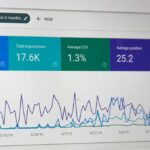
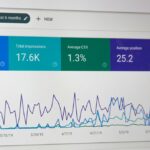
Photo by Stephen Phillips – Hostreviews.co.uk on Unsplash.